Table of Contents
What Is BPC-157?
BPC-157 (Body Protection Compound-157) is a synthetic pentadecapeptide — a chain of 15 amino acids (Gly-Glu-Pro-Pro-Pro-Gly-Lys-Pro-Ala-Asp-Asp-Ala-Gly-Leu-Val) — derived from a protective protein found naturally in human gastric juice. First isolated and characterized by Professor Predrag Sikiric and colleagues at the University of Zagreb in the early 1990s, it has since become one of the most widely studied peptides in the tissue-repair and regenerative-medicine literature, with over 100 published preclinical studies documenting a wide range of BPC-157 benefits.
The BPC-157 benefits extend far beyond what most single-target research peptides offer. Unlike compounds that target a single receptor or pathway, BPC-157 appears to exert broad protective and reparative effects across multiple organ systems. Preclinical studies have investigated its role in tendon, ligament, muscle, bone, and nerve healing, as well as gut mucosal protection, hepatoprotection, and angiogenesis — the formation of new blood vessels at injury sites.
Mechanism of Action
BPC-157’s reparative effects — central to the many BPC-157 benefits — operate through several well-characterized pathways:
- VEGF and angiogenesis: BPC-157 upregulates vascular endothelial growth factor (VEGF) and its receptor VEGFR2, directly promoting the formation of new blood vessels at injury sites. This enhanced vascularization accelerates nutrient delivery and waste removal during healing.
- Nitric oxide (NO) system: It modulates NO synthase activity, interacting with both the enzyme and downstream NO release. This promotes vasodilation, improves local blood flow, and supports endothelial repair. Research by the Sikiric group has characterized this as a bidirectional interaction — BPC-157 can counteract both NO-excess and NO-deficiency states.
- FAK-paxillin signaling: BPC-157 activates the focal adhesion kinase (FAK) and paxillin pathway, which drives cell migration and adhesion — two processes critical for wound closure and tissue remodeling.
- Growth factor modulation: It upregulates EGF (epidermal growth factor), FGF (fibroblast growth factor), HGF (hepatocyte growth factor), and TGF-beta in injured tissue, coordinating a multi-pathway repair response.
Key BPC-157 Benefits in Preclinical Research
Tendon and Ligament Repair — Core BPC-157 Benefits
Multiple rodent studies have demonstrated that BPC-157 accelerates the healing of surgically transected tendons — including the Achilles tendon (Cerovecki et al., 2010) and rotator-cuff models. Researchers observed faster collagen fiber organization, improved biomechanical strength at the repair site, and earlier return of functional load-bearing capacity compared to controls. BPC-157 also enhanced tendon-to-bone healing at enthesis sites, which is particularly relevant for research into surgical repair outcomes.
Muscle Injury Recovery
In crush-injury and laceration models (Staresinic et al., 2006), BPC-157 administration was associated with earlier resolution of inflammation, enhanced satellite-cell activation, and improved muscle fiber continuity. These preclinical outcomes suggest that BPC-157 may support the body’s natural repair cascade following significant soft-tissue trauma.
Bone Healing
Krivic et al. (2006, Journal of Orthopaedic Research) demonstrated that BPC-157 accelerated bone defect healing in rats, with increased osteoblast activity and earlier bridging callus formation. Subsequent studies showed enhanced segmental bone defect repair, suggesting BPC-157’s angiogenic and growth-factor effects extend to hard-tissue regeneration as well as soft tissue.
Gut Mucosal Protection and Cytoprotection
Given its origin in gastric juice, BPC-157 benefits are particularly notable in gastrointestinal research. Studies have documented its ability to reduce ulcer size in multiple injury models: NSAID-induced (indomethacin, aspirin), ethanol-induced, and capsaicin-induced gastric lesions, all in a dose-dependent fashion. The mechanism involves maintaining mucosal blood flow, promoting angiogenesis via VEGF, and modulating the NO system to protect the gastric lining.
Researchers investigating inflammatory bowel conditions have noted BPC-157’s potential to protect gut-barrier integrity and accelerate mucosal recovery. Its cytoprotective effects extend beyond the GI tract — studies have shown protection against various toxic agents including alcohol and common pharmaceuticals.
Hepatoprotection
BPC-157 reduced liver fibrosis and improved hepatic function in rat models of chronic alcohol administration and hepatotoxin exposure (carbon tetrachloride, paracetamol). The proposed mechanism involves upregulation of hepatocyte growth factor (HGF) and EGF expression in liver tissue, combined with improved hepatic blood flow via NO-system modulation. These findings position BPC-157 as a compound of interest for researchers studying liver injury and recovery.
Angiogenesis and Vascular Repair
Beyond localized wound healing, BPC-157’s vascular effects include promoting collateral vessel formation in ischemia models and accelerating endothelial repair. This systemic vascular activity may explain why BPC-157 shows effects across so many tissue types — improved blood supply is a universal requirement for tissue repair regardless of the organ system involved.
Neuroprotective BPC-157 Benefits
Preclinical work has explored BPC-157’s effects on peripheral nerve injuries. Studies in rat models of sciatic nerve transection reported improved nerve fiber regeneration and functional recovery. Beyond peripheral nerves, BPC-157 interacts with central neurotransmitter systems in ways that suggest a stabilizing rather than unidirectional effect: it counteracts both amphetamine-induced hyperactivity and haloperidol-induced catalepsy in rodent models, affects serotonin turnover in multiple brain regions, and interacts with GABAergic transmission. These findings, primarily from the Sikiric laboratory, suggest neuromodulatory properties that warrant further investigation.
Oral vs Injectable Administration: Maximizing BPC-157 Benefits
One of BPC-157’s most distinctive properties is its stability in gastric acid. Unlike virtually all other bioactive peptides, BPC-157 resists degradation in the acidic environment of the stomach (pH 1–2) and retains biological activity when administered orally. This is highly unusual for a 15-amino-acid peptide and reflects its origin as a fragment of a gastric juice protein.
In preclinical studies, oral administration shows comparable wound-healing effects for GI-tract targets (ulcers, mucosal injury), while injectable routes (subcutaneous, intraperitoneal) produce stronger systemic and musculoskeletal effects. This route flexibility makes BPC-157 uniquely practical for research protocols that require non-invasive administration.
How BPC-157 Is Used in Research
BPC-157 is supplied as a lyophilized (freeze-dried) powder requiring reconstitution with bacteriostatic water before use. Standard reconstitution protocols call for slow injection of the solvent down the vial wall — never shake a peptide vial, as this causes mechanical denaturation.
Common research dosing in the published literature ranges from 1–10 mcg/kg of body weight in rodent models, administered via subcutaneous or intraperitoneal injection. Human-equivalent dosing extrapolations in the research community typically cite 200–500 mcg/day subcutaneously, though no approved human dosing protocol exists. Researchers should always consult the primary literature and their institutional protocols when designing experiments.
For reconstitution supplies, insulin syringes and bacteriostatic water are essential components. Our dosage calculator helps determine precise draw volumes after reconstitution.
BPC-157 Product Options at Aminopeptides.ca
To explore the full range of BPC-157 benefits in your research, Aminopeptides.ca offers pharmaceutical-grade options:
We carry BPC-157 in two vial sizes to accommodate different research timelines and protocols:
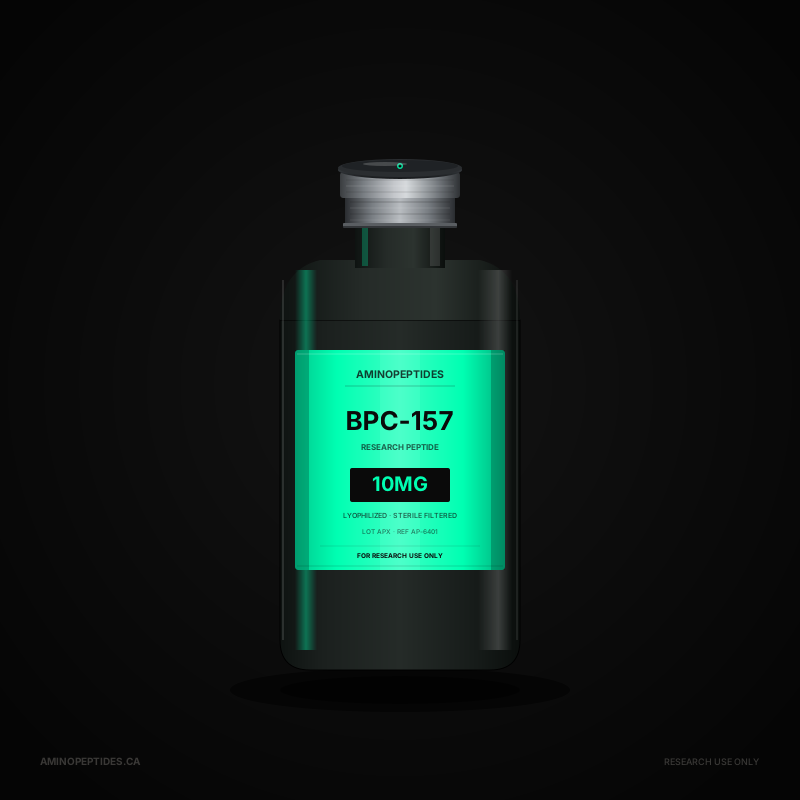
- BPC-157 — 10 mg: Ideal for shorter studies or initial protocol development.
- BPC-157 — 20 mg: Better value for extended research programs.
For researchers investigating synergistic healing protocols, our BPC-157 + TB-500 Blend combines two of the most studied tissue-repair peptides in a single vial. TB-500 (Thymosin Beta-4 fragment) operates through complementary mechanisms — promoting cell migration via actin dynamics and reducing inflammation through NF-κB modulation — making this combination a popular choice in recovery-focused research. See our BPC-157 vs TB-500 comparison for a detailed breakdown.
Purity and Quality Assurance
Every lot of BPC-157 shipped from Aminopeptides.ca undergoes third-party HPLC purity testing, with results consistently meeting or exceeding ≥99.9% purity. A Certificate of Analysis (CoA) is included with every order, documenting exact purity percentages, mass-spectrometry molecular weight confirmation, and endotoxin levels. Learn more about why purity testing matters in our Learning Hub.
Storage and Handling
Proper storage is essential to preserve BPC-157 benefits over time and maintain peptide integrity for research use.
Lyophilized BPC-157 vials should be stored at -20°C for long-term archival or 2–8°C for near-term use. BPC-157 is more inherently stable than most peptides due to its gastric-acid resistance, but proper cold-chain storage remains essential for maintaining maximum potency. Once reconstituted in bacteriostatic water, vials should be refrigerated at 2–8°C, protected from light, and used within 28 days. Always use sterile technique and a fresh syringe for each draw to prevent contamination.
For a complete guide to proper peptide handling, see our article on peptide storage and shelf life.
Important Disclaimer
While the BPC-157 benefits described in this article are supported by preclinical research, all information is provided strictly for educational and research purposes.
All products sold on Aminopeptides.ca are research-grade reference standards intended for laboratory research purposes only. BPC-157 is not a drug, not a supplement, and not approved for human or veterinary use. No completed human clinical trials exist for BPC-157; all findings referenced above are from preclinical (animal model) research. Researchers are responsible for complying with all applicable institutional, provincial, and federal regulations governing peptide research.