Cognitive
Lead
The cognitive category gathers the peptides Canadian researchers most often request when modelling neuroplasticity, anxiolysis, BDNF expression, attention, and stress-axis regulation. Most originate from Russian neuropeptide research programs (the Institute of Molecular Genetics in Moscow and the Khavinson school in St. Petersburg) and have been studied in cerebrovascular and cognitive-decline contexts since the late 1980s. Every vial ships lyophilized from a Canadian fulfillment facility with a third-party Certificate of Analysis. The category is curated around five molecules with substantial peer-reviewed neuroscience literature.
Mechanism Overview
Cognitive function emerges from the interaction of monoaminergic tone, neurotrophic-factor expression, synaptic plasticity, and HPA-axis regulation. The peptides in this category act on each.
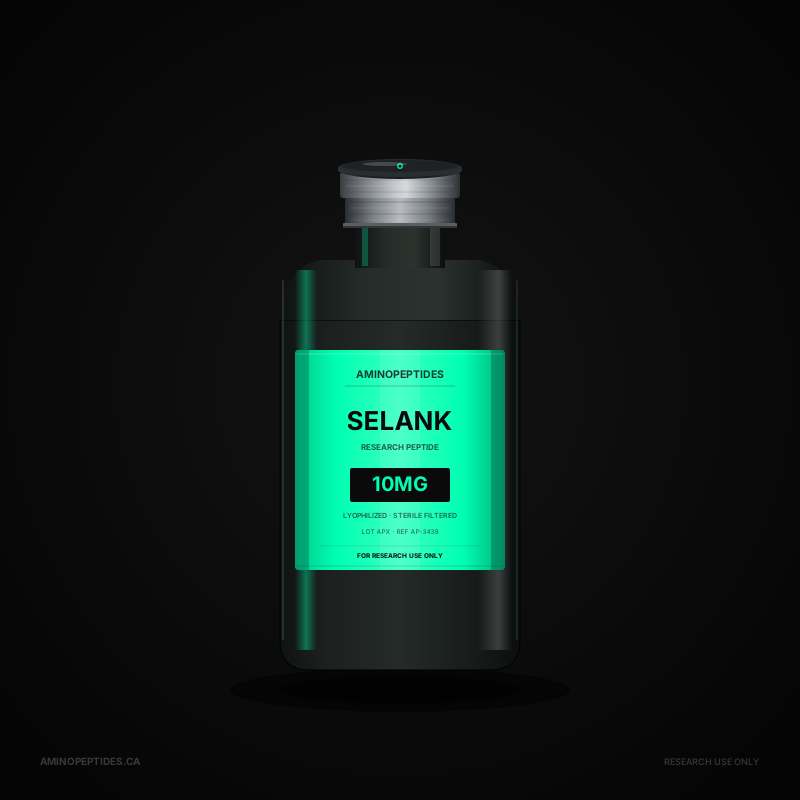
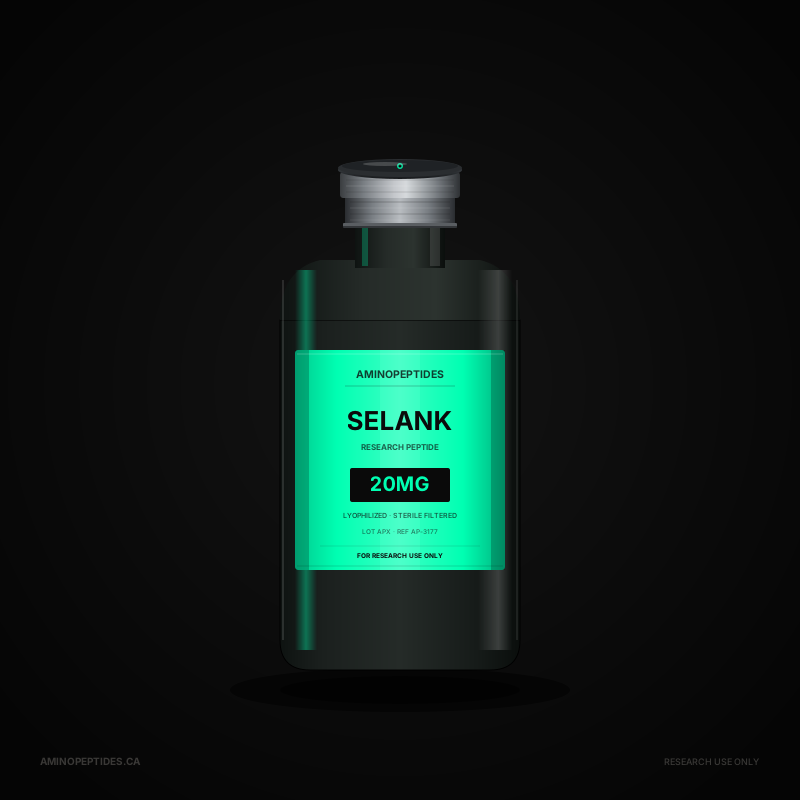
Selank (Thr-Lys-Pro-Arg-Pro-Gly-Pro) is a synthetic heptapeptide analogue of tuftsin, modified for blood-brain-barrier penetration and metabolic stability. Russian electrophysiology studies report serotonergic and GABAergic modulation alongside BDNF upregulation in hippocampal preparations.
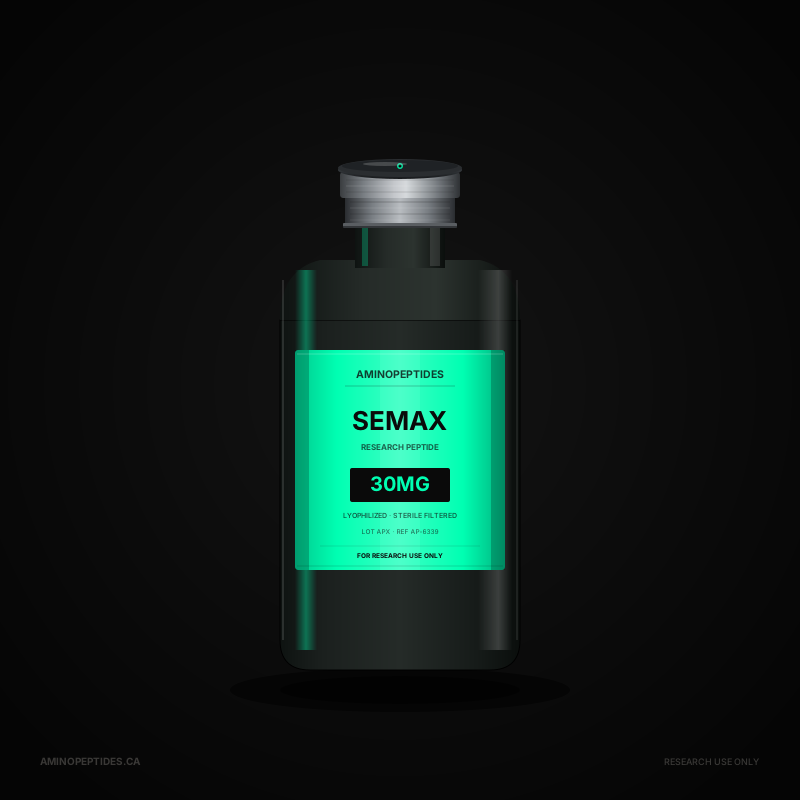
Semax (Met-Glu-His-Phe-Pro-Gly-Pro) is a synthetic ACTH(4–7) analogue lacking the steroidogenic activity of the parent hormone. It increases BDNF and NGF expression in rodent hippocampus and is the only peptide-class molecule on the Russian Vital and Essential Drugs list for stroke recovery.
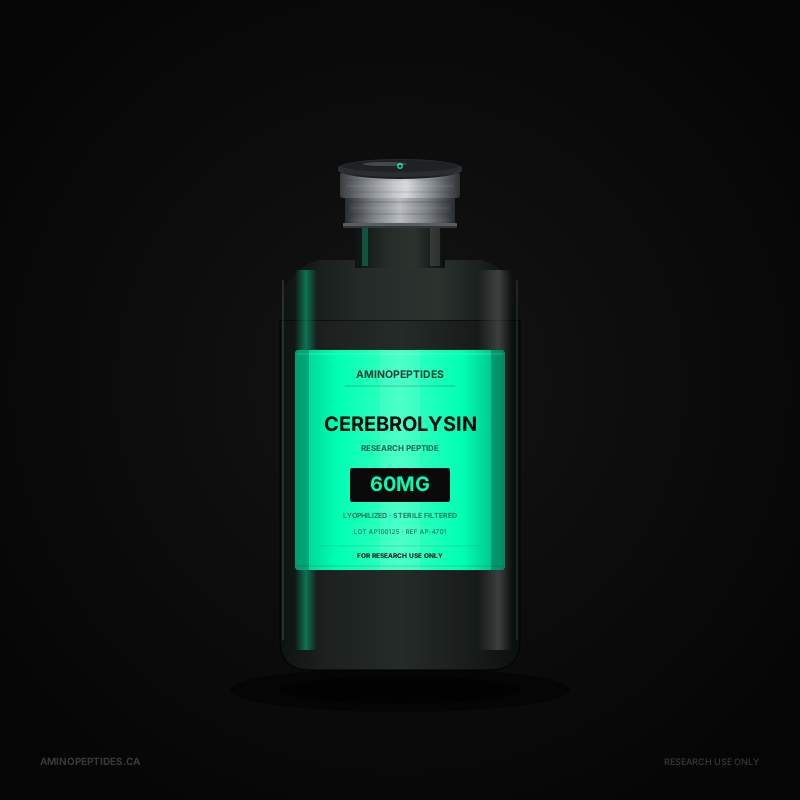
Cerebrolysin is a porcine-brain-derived neuropeptide preparation containing low-molecular-weight peptides and free amino acids. Multiple meta-analyses (notably Cochrane reviews on vascular dementia) have evaluated its effects on cognitive endpoints.
Pinealon (Glu-Asp-Arg) is a Khavinson-school tripeptide bioregulator that crosses the blood-brain barrier and is studied for neuroprotection under oxidative-stress and excitotoxicity models.
DSIP (delta sleep-inducing peptide, Trp-Ala-Gly-Gly-Asp-Ala-Ser-Gly-Glu) modulates slow-wave sleep architecture and is included in cognitive research because consolidation of declarative memory is sleep-dependent.
Featured Products
Selank (5 mg / 10 mg) — Heptapeptide tuftsin analogue studied for anxiolytic, GABAergic, and BDNF-modulatory effects. Typically reconstituted at 1 mg/mL for intranasal-route research.
Semax (10 mg / 30 mg) — Synthetic ACTH(4–7) analogue used in BDNF/NGF expression studies and cerebrovascular-recovery research models.
Cerebrolysin (5 mL ampoule) — Porcine-brain-derived neuropeptide complex; pre-dissolved liquid format for direct research use without reconstitution.
Pinealon (20 mg) — Tripeptide bioregulator studied for neuronal-survival signalling under oxidative-stress and glutamate-excitotoxicity models.
DSIP (5 mg) — Nine-residue peptide used in sleep-architecture and memory-consolidation research; reconstitutes at 1 mg/mL in bacteriostatic water.
Research Applications
Researchers use this category to interrogate questions such as: does Selank produce measurable anxiolytic-pattern shifts in rodent elevated-plus-maze paradigms; how does Semax compare with control on BDNF and NGF mRNA expression in hippocampal slices; can Cerebrolysin alter synaptic-density markers in middle-cerebral-artery occlusion models; does Pinealon protect cortical neurons from H₂O₂-induced apoptosis; and does DSIP administration measurably increase slow-wave sleep duration in EEG studies. The category is also used for comparative work — benchmarking peptide nootropics against racetam-class small molecules, modafinil, or methylphenidate on attention and learning-task endpoints. Translational groups extend this work into stroke-recovery modelling, traumatic-brain-injury repair kinetics, and age-related cognitive-decline interventions, positioning peptide nootropics alongside classical neuroprotective and neurotrophic candidates.
Safety & Handling
Reconstitute lyophilized cognitive peptides with bacteriostatic water using sterile technique. After reconstitution, store at 2–8 °C and use within 28 days. Cerebrolysin ships pre-dissolved in glass ampoules and should be refrigerated upon receipt; once opened, use within 24 hours. Selank and Semax are commonly studied via intranasal-route models; researchers using nasal-spray devices should sterilize between batches. All cognitive peptides are sold strictly for in-vitro and laboratory research; they are not intended for human or veterinary use.
FAQ
What’s the difference between Selank and Semax? Both are Russian-origin neuropeptides, but Selank derives from tuftsin and is studied primarily for anxiolytic and immunomodulatory effects, while Semax derives from ACTH(4–7) and is studied for cerebrovascular-recovery and BDNF-induction endpoints.
Is Cerebrolysin a single peptide or a mixture? A mixture — it is a standardized enzymatic hydrolysate of porcine-brain proteins, containing low-molecular-weight peptides and free amino acids. Each lot is standardized by HPLC fingerprinting.
Why is DSIP in the cognitive category and not just sleep? Because slow-wave sleep is when declarative memory consolidates. DSIP’s effects on sleep architecture have direct downstream implications for memory-research endpoints.
Are these peptides typically administered intranasally in research? Selank and Semax are most commonly studied via intranasal-route models because nasal absorption produces rapid CSF exposure. Other peptides in this category use injectable research routes.
How does Pinealon’s mechanism differ from typical neuroprotective compounds? Pinealon is a short bioregulator (three residues) that appears to act on gene-expression-level regulation rather than receptor binding — a mechanism more akin to the Khavinson bioregulator class than to classical neurotrophins.
Do you ship cognitive peptides across Canada? Yes — all cognitive peptides ship tracked from within Canada via Canada Post or courier, typically arriving in 2–5 business days.
Do these compounds cross the blood-brain barrier? Selank and Semax were specifically engineered for BBB penetration via small size and amphipathic profile; Pinealon and DSIP also penetrate based on rodent CSF studies. Cerebrolysin’s BBB transit is mixed — different fragments behave differently — which is why intramuscular and IV research routes dominate its literature.
Compliance
For laboratory research purposes only — not for human consumption. Not approved by Health Canada for therapeutic use.
Internal Links Plan
- /products/selank-10mg → product page
- /products/semax-30mg → product page
- /products/cerebrolysin-ampoule → product page
- /products/pinealon-20mg → product page
- /products/dsip-5mg → product page
- /categories/sleep-peptides → cross-category (DSIP overlap)
- /categories/anti-aging-peptides → cross-category (Pinealon overlap)
- /category/learning-hub/intranasal-peptide-research-protocols → learning hub
Showing all 5 results