Tanning
Lead
The tanning category covers the two synthetic α-MSH analogues used in melanogenesis research: Melanotan I (Afamelanotide) and Melanotan II. Both are designed to engage melanocortin receptors with greater stability than native α-MSH, but they differ in receptor selectivity and pharmacological profile. Both ship lyophilized from a Canadian fulfillment facility with a third-party Certificate of Analysis. Researchers use this category to model melanin synthesis, melanocortin-receptor pharmacology, photoprotection mechanisms, and the broader α-MSH signalling network — including its overlap with appetite, libido, and inflammation pathways.
Mechanism Overview
Skin pigmentation is governed by α-melanocyte-stimulating hormone (α-MSH) signalling at the MC1 receptor on melanocytes, which activates adenylate cyclase, raises intracellular cAMP, and upregulates tyrosinase — the rate-limiting enzyme in eumelanin synthesis. Native α-MSH is a 13-amino-acid peptide with a very short plasma half-life (minutes), limiting its research utility. The Melanotan compounds were developed at the University of Arizona (Hadley and Hruby) in the 1980s as stabilized analogues with extended duration of action.
Melanotan I (also known as Afamelanotide; INN Nle⁴-D-Phe⁷-α-MSH; brand name Scenesse) is a linear 13-residue α-MSH analogue with substitutions at positions 4 and 7 that confer enzymatic stability and extended MC1-R binding. It is approved in the EU and US for erythropoietic protoporphyria (EPP), giving it a substantial published clinical-pharmacology dataset. It retains relative MC1-R selectivity, making it the cleaner research tool for isolated melanogenesis questions.
Melanotan II is a cyclic heptapeptide derivative — a lactam bridge between residues 5 and 10 of α-MSH — with broader affinity across MC1, MC3, MC4, and MC5 receptors. The MC4 affinity explains its overlap with appetite and central-arousal effects (the same MC4 pathway underlies PT-141’s mechanism). This pan-receptor profile makes Melanotan II useful for broader melanocortin-system research but less selective than Melanotan I for melanogenesis-only endpoints.
Featured Products
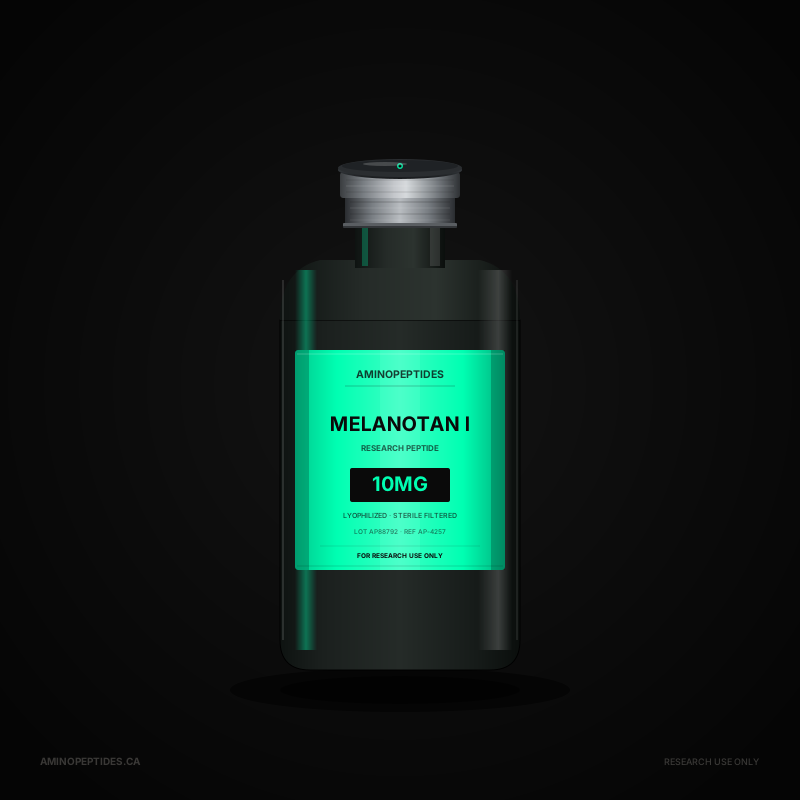
Melanotan I / Afamelanotide (10 mg) — Linear 13-residue α-MSH analogue with relative MC1-R selectivity. Studied in melanogenesis, photoprotection, and EPP-model research at typical 0.5–1 mg research dosing.
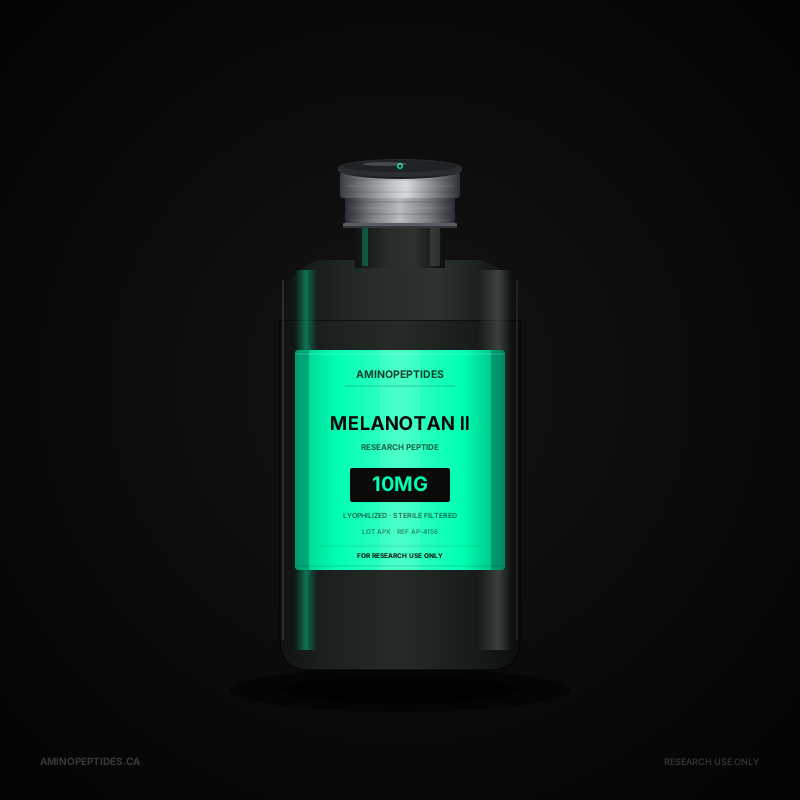
Melanotan II (10 mg) — Cyclic heptapeptide α-MSH analogue with pan-melanocortin (MC1/3/4/5) activity. Studied in melanogenesis plus broader melanocortin-system research including MC4-mediated central effects.
Research Applications
Investigators use this category to interrogate questions such as: what is the dose–response curve for tyrosinase upregulation in cultured melanocytes following Melanotan I versus Melanotan II exposure; how does MC1-R selectivity affect off-target endpoints (appetite, libido, blood pressure) in rodent models; can Melanotan I provide measurable photoprotection in UV-challenge models of fair-skin melanocyte cultures; how does the eumelanin-to-pheomelanin ratio shift under sustained Melanotan exposure; and what is the comparative receptor binding affinity profile of Melanotan I and II across the full MC1–MC5 family. The category also supports translational dermatology research on pigmentation disorders, including vitiligo and EPP-model work.
Safety & Handling
Reconstitute Melanotan I and Melanotan II with bacteriostatic water using sterile technique. After reconstitution, refrigerate at 2–8 °C and use within 28 days. Lyophilized vials stored at –20 °C are stable for 24+ months. Both compounds are light-sensitive — store in amber vials away from direct light and minimize ambient-light exposure during transfers. Solutions may develop slight tint over time; this reflects the chromophoric profile of the molecule rather than degradation. All Melanotan compounds are sold for in-vitro and laboratory research only; they are not intended for human or veterinary use.
FAQ
What’s the difference between Melanotan I and Melanotan II? Melanotan I is linear and relatively MC1-receptor selective, making it cleaner for melanogenesis-only research. Melanotan II is cyclic and pan-receptor (MC1/3/4/5), giving it broader pharmacological effects including overlap with the MC4 pathway PT-141 targets.
Is Afamelanotide the same as Melanotan I? Yes — Afamelanotide is the INN for Melanotan I. The brand name Scenesse refers to the same molecule, approved in the EU and US for erythropoietic protoporphyria.
Why does Melanotan II have appetite and arousal effects in research models? Because of its MC4-receptor activity. The MC4 receptor in the hypothalamus modulates both food intake and central arousal signalling — the same pathway PT-141 (Bremelanotide) targets selectively.
Does Melanotan stimulate eumelanin or pheomelanin? Published research suggests preferential eumelanin (the dark, photoprotective form) production via MC1-R signalling. The eumelanin-to-pheomelanin ratio shift is itself an active research question in pigmentation biology.
Are these compounds the same as the molecules used in the Scenesse implant? Melanotan I is the same molecule as the active ingredient in Scenesse, but the implant is a controlled-release formulation. Lyophilized research vials provide the active peptide for in-vitro and in-vivo research outside that formulation.
Do you ship tanning peptides across Canada? Yes — Melanotan I and II ship tracked from within Canada via Canada Post or courier, typically arriving in 2–5 business days with cold-pack protection during summer months.
Compliance
For laboratory research purposes only — not for human consumption. Not approved by Health Canada for therapeutic use.
Internal Links Plan
- /products/melanotan-1-10mg → product page
- /products/melanotan-2-10mg → product page
- /categories/libido-peptides → cross-category (MC4 / PT-141 overlap)
- /categories/immune-peptides → cross-category (KPV / α-MSH overlap)
- /category/learning-hub/melanocortin-receptor-family → learning hub
- /category/learning-hub/melanin-biosynthesis-pathway → learning hub
- /category/learning-hub/peptide-reconstitution-guide → learning hub
- /faq/research-use-only-framework → policy page
Showing all 2 results