Table of Contents
BPC-157 vs TB-500: The 30-Second Verdict
The BPC-157 vs TB-500 comparison is one of the most common questions in peptide research. Both are healing peptides, but they work through different mechanisms. This BPC-157 vs TB-500 guide breaks down the evidence to help you choose the right compound for your study.
BPC-157 drives local tissue repair — gut lining, tendons, ligaments, and vascular repair at the injury site. TB-500 (thymosin beta-4 fragment) drives systemic cellular migration — it mobilizes stem cells and actin rearrangement across the whole body. Most advanced research protocols stack both for complementary coverage.
Mechanism of Action: BPC-157
BPC-157 (Body Protection Compound-157) is a 15-amino-acid peptide derived from human gastric juice. Its reparative effects operate through several well-characterized pathways. It upregulates vascular endothelial growth factor (VEGF) and its receptor VEGFR2, directly promoting angiogenesis — the formation of new blood vessels at injury sites. This enhanced vascular supply accelerates nutrient delivery and waste removal during the healing process.
BPC-157 also modulates the nitric oxide (NO) system, interacting with both NO synthase enzymes and downstream NO release. This dual interaction promotes vasodilation, improves local blood flow, and supports endothelial repair. Beyond vascular effects, BPC-157 activates the FAK-paxillin signaling pathway, which drives cell migration and adhesion — two processes critical for wound closure and tissue remodeling.
At the growth-factor level, BPC-157 modulates expression of EGF (epidermal growth factor), FGF (fibroblast growth factor), and TGF-beta in injured tissue, coordinating a multi-pathway repair response that few single-agent peptides can match. Centrally, it also influences dopaminergic and GABAergic neurotransmitter systems, which may contribute to its observed effects on stress-related tissue damage.
Mechanism of Action: TB-500
TB-500 is a synthetic 17-amino-acid fragment of thymosin beta-4, a 43-amino-acid peptide naturally present in most mammalian cells. Its primary mechanism is fundamentally different from BPC-157. TB-500 sequesters G-actin monomers, regulating actin polymerization and thereby controlling cytoskeletal dynamics essential for cell migration. In practical terms, this means TB-500 helps cells physically move toward injury sites — a process critical for tissue regeneration.
TB-500 promotes cell migration and differentiation, particularly in endothelial cells and keratinocytes. Its anti-inflammatory effects include downregulation of pro-inflammatory cytokines (IL-1, TNF-alpha) and modulation of the NF-κB pathway. It also regulates matrix metalloproteinases (MMPs), particularly MMP-2 and MMP-9, which are involved in extracellular matrix remodeling during tissue repair.
BPC-157 vs TB-500 Head-to-Head Comparison
| Attribute | BPC-157 | TB-500 |
|---|---|---|
| Source | 15-aa fragment of gastric protein BPC | 17-aa fragment of thymosin beta-4 |
| Primary action | VEGF upregulation, NO pathway modulation, FAK-paxillin signaling | G-actin sequestration, cell migration, NF-κB modulation |
| Primary target tissues | Gut, tendon, ligament, vasculature, liver | Muscle, cardiac tissue, skin, cornea |
| Half-life (subQ) | ~30 min (remarkably stable in gastric acid) | ~2–3 hours |
| Route flexibility | Oral, subcutaneous, intraperitoneal | Subcutaneous, intraperitoneal |
| Anti-inflammatory mechanism | NO-mediated vasodilation, growth factor modulation | Direct cytokine suppression (IL-1, TNF-α), NF-κB |
Key Published Research
BPC-157 Studies
- Sikiric et al. (1993–2020s) — Foundational body of work spanning GI healing, tendon repair, and cytoprotection. Demonstrated BPC-157’s effects across dozens of injury models.
- Cerovecki et al. (2010) — Achilles tendon healing in rats, showing faster collagen fiber organization and improved biomechanical strength.
- Staresinic et al. (2006) — Muscle crush-injury model showing accelerated repair and earlier functional recovery.
TB-500 Studies
- Malinda et al. (1999) — Dermal wound healing acceleration via thymosin beta-4.
- Bock-Marquette et al. (2004) — Cardiac protection post-myocardial infarction in mice, demonstrating improved survival and reduced scar size.
- Sosne et al. (2002–2007) — Corneal wound healing and anti-inflammatory effects, leading to clinical development for dry eye.
- Philp et al. (2004) — Cell migration mechanism characterization via actin dynamics.
BPC-157 vs TB-500 Tissue-Specific Performance
| Tissue Type | BPC-157 Evidence | TB-500 Evidence |
|---|---|---|
| Tendon / Ligament | Strong — multiple rat Achilles and rotator cuff models | Moderate — supported via actin remodeling data |
| Skeletal Muscle | Demonstrated repair acceleration in crush-injury models | Supported via cytoskeletal dynamics and satellite cell mobilization |
| Cardiac Tissue | Some protective data in ischemia models | Strong — Bock-Marquette post-MI survival data |
| GI Tract | Strongest evidence base — gastric ulcers, intestinal lesions, IBD models | Limited direct GI data |
| Nervous System | Neuroprotective in TBI and nerve transection models | Some evidence in CNS injury repair |
Typical Research Dosing
BPC-157
- Low: 200 mcg/day
- Standard: 250–500 mcg/day
- High / acute injury models: up to 750 mcg/day in divided doses
- Cycle: 4–8 weeks, then 4-week washout
TB-500
- Loading phase (weeks 1–4): 4–5 mg/week
- Maintenance: 2 mg/week
- Cycle: 6 weeks, then 4-week washout
Use the peptide dosage calculator to convert any dose to units on a U-100 syringe.
BPC-157 vs TB-500: The Stacking Rationale
Rather than choosing BPC-157 vs TB-500, many researchers combine both peptides for synergistic healing effects.
Researchers frequently combine BPC-157 and TB-500 because their mechanisms are complementary rather than redundant. BPC-157 primarily drives angiogenesis and growth-factor modulation — it builds the vascular infrastructure that supports repair. TB-500 primarily drives cytoskeletal remodeling and cell migration — it mobilizes the cells that perform the actual repair work. Together, they address both vascular supply and cellular repair simultaneously, potentially accelerating overall tissue regeneration timelines beyond what either peptide achieves alone in preclinical models.
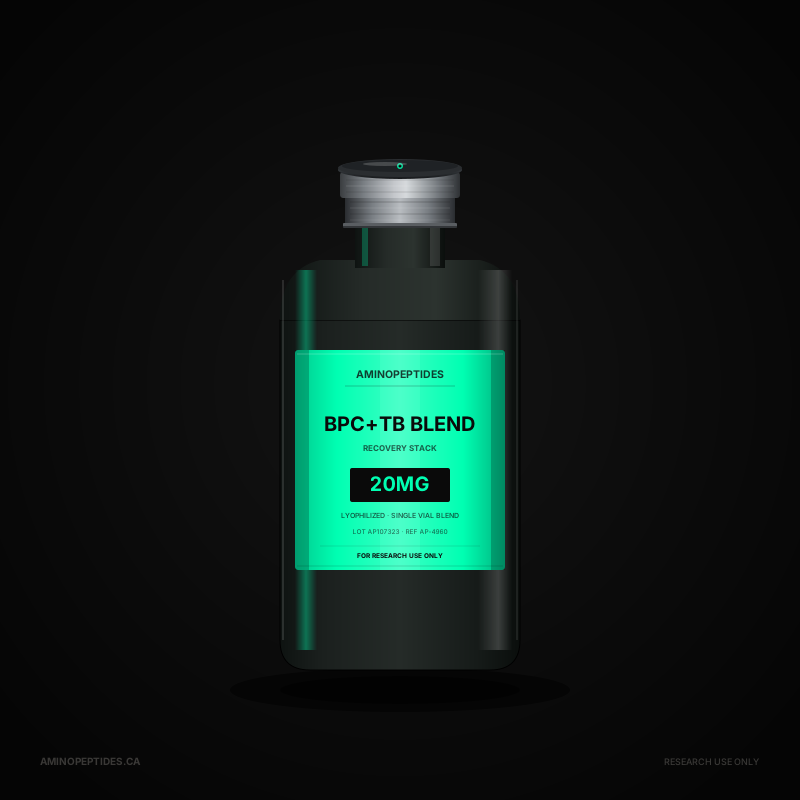
The combination is available in our BPC-157 + TB-500 blend vial, pre-mixed for research convenience.
When to Use Which
- Localized musculoskeletal research (tendon models, GI models, localized vascular repair): BPC-157 alone.
- Systemic soft-tissue models (muscle regeneration, cardiac repair, dermal wounds): TB-500 alone.
- Major tissue-repair protocols requiring both vascular and cellular components: stack both.
- GI-focused protocols: BPC-157 is the clear choice, with the option of oral administration.
- Cardiac research models: TB-500 has the stronger evidence base (Bock-Marquette data).
BPC-157 vs TB-500 Safety Profile
In the BPC-157 vs TB-500 comparison, both peptides show favorable safety profiles in preclinical literature.
Both peptides have shown favorable tolerability in rodent and limited human research. BPC-157 has demonstrated no significant toxicity across numerous rodent studies even at high doses (Sikiric et al.), with no reported hepatotoxicity, no cardiovascular signal, and no reported dependence. TB-500 shares a similarly clean safety profile, though theoretical concerns exist regarding its pro-angiogenic and cell-migration properties in the context of existing tumors — direct tumorigenic evidence is lacking, but researchers working with tumor models should note the potential interaction.
No approved human therapeutic use exists for either peptide, and both are sold strictly for research purposes.
Stability and Storage
When comparing BPC-157 vs TB-500 storage requirements, both peptides share similar lyophilized stability profiles.
BPC-157 is remarkably stable in acidic environments (it resists degradation in gastric juice at pH 1–2), which is exceptional for a 15-amino-acid peptide and reflects its gastric-juice origin. Lyophilized BPC-157 is stable long-term at -20°C, and once reconstituted should be refrigerated at 2–8°C with a usable window of several weeks. TB-500 is less inherently acid-stable; lyophilized powder should be stored at -20°C, and reconstituted solutions at 2–8°C with shorter use windows. Both peptides degrade with repeated freeze-thaw cycles — aliquoting into single-use volumes is recommended.
Where to Source
For your BPC-157 vs TB-500 research, Aminopeptides.ca offers both peptides individually and as a pre-blended stack.
Shop our Healing & Repair peptides collection. Every vial is ≥ 99.9% HPLC-verified, shipped cold-chain from Canada, with a batch-specific purity report available on request.