Immune
Lead
The immune category covers the peptides Canadian researchers most often request when modelling T-cell maturation, innate-immune signalling, antimicrobial host defense, and inflammatory resolution. It spans two mechanistic families: thymic-origin peptides that drive adaptive-immunity maturation (Thymosin α-1, Thymalin) and host-defense or anti-inflammatory peptides that modulate innate immunity (LL-37, KPV). Every vial ships lyophilized from a Canadian fulfillment facility with a third-party Certificate of Analysis. Researchers use this category to interrogate immunosenescence, infection-response models, mucosal inflammation, and immune-axis crosstalk.
Mechanism Overview
Immunity emerges from the integrated activity of thymic T-cell maturation, dendritic-cell antigen presentation, antimicrobial peptide release at barrier surfaces, and downstream cytokine cascades. The peptides in this category act on each.
Thymosin α-1 (Tα1) is a 28-amino-acid peptide originally isolated from thymus extracts by Goldstein and colleagues in the 1970s. It promotes T-cell maturation from CD4⁻CD8⁻ thymocytes, enhances dendritic-cell antigen presentation via TLR2/9 signalling, and modulates Th1/Th2 cytokine balance. It is registered in over 30 countries as Zadaxin for hepatitis B and certain oncology indications, providing a deep clinical-pharmacology dataset.
Thymalin is a polypeptide complex from calf thymus tissue, developed in the Khavinson school as a thymic bioregulator. Russian gerontology literature describes its effects on age-related thymic involution and T-cell pool restoration.
LL-37 is the C-terminal 37-residue cleavage product of human cathelicidin (hCAP18). It is the principal endogenous antimicrobial peptide in human skin, neutrophils, and respiratory epithelium, with broad-spectrum activity against bacteria, fungi, and enveloped viruses. Its mechanism involves direct membrane permeabilization plus immunomodulatory signalling via FPRL1 receptors.
KPV (lysyl-prolyl-valine) is the C-terminal tripeptide of α-MSH. It retains the anti-inflammatory activity of the parent hormone — including downregulation of NF-κB signalling — without the melanogenic activity, making it useful in mucosal-inflammation research models.
Featured Products
Thymosin α-1 / Tα1 (5 mg / 10 mg) — 28-amino-acid thymic peptide studied for T-cell maturation, dendritic-cell signalling, and Th1/Th2 cytokine balance. Reconstitutes cleanly at 1 mg/mL.
Thymalin (10 mg) — Polypeptide thymic bioregulator from the Khavinson school, studied for age-related thymic involution and T-cell pool restoration in immunosenescence models.
LL-37 / Cathelicidin (5 mg) — Principal human antimicrobial peptide; studied for membrane-permeabilization mechanisms, FPRL1 receptor signalling, and host-defense pathway research.
KPV (10 mg) — α-MSH C-terminal tripeptide studied for NF-κB downregulation and mucosal-inflammation models. Frequently studied in colitis and dermatitis research designs.
Research Applications
Investigators use this category to interrogate questions such as: does Thymosin α-1 enhance dendritic-cell maturation markers in TLR-stimulated bone-marrow cultures; can Thymalin restore T-cell receptor diversity in aged-rodent thymus preparations; what is LL-37’s MIC profile against multi-drug-resistant bacterial isolates and how does it shift in different ionic environments; does KPV downregulate NF-κB-driven cytokine release in DSS-colitis models; and how does the combination of thymic and antimicrobial peptides perform in compromised-immunity models. The category is also used for translational infectious-disease research, immunosenescence work, and inflammatory-bowel-disease pathway modelling.
Safety & Handling
Reconstitute lyophilized immune peptides with bacteriostatic water using sterile technique. After reconstitution, refrigerate at 2–8 °C and use within 28 days. LL-37 is particularly sensitive to enzymatic degradation — minimize freeze-thaw cycles and consider aliquoting reconstituted stock. Thymosin α-1 and Thymalin are stable lyophilized at –20 °C for 24+ months. Always document lot numbers against your COA. All immune peptides are sold strictly for in-vitro and laboratory research; they are not intended for human or veterinary use.
FAQ
What’s the difference between Thymosin α-1 and Thymalin? Thymosin α-1 is a single, fully characterized 28-amino-acid peptide produced synthetically. Thymalin is a polypeptide complex extracted from calf thymus tissue and standardized by activity rather than by single-molecule purity.
Is LL-37 effective against viruses as well as bacteria? Yes — published research describes activity against enveloped viruses including influenza and certain herpesviruses, in addition to its broad antibacterial spectrum. The mechanism differs (membrane disruption for bacteria; envelope interaction for viruses).
Why is KPV studied for gut-inflammation research? KPV downregulates NF-κB signalling — the central inflammatory pathway in IBD pathology — without the melanogenic activity of full-length α-MSH. Multiple DSS-colitis studies have evaluated its mucosal effects.
Can Thymosin α-1 be combined with Thymalin in research? They target overlapping but distinct nodes of T-cell maturation. Some researchers use them sequentially (Thymalin for thymic stromal effects, then Tα1 for downstream T-cell signalling) in immunosenescence models.
Is LL-37 the same as cathelicidin? LL-37 is the active C-terminal fragment of human cathelicidin (hCAP18). Cathelicidin is the precursor; LL-37 is the cleaved active peptide.
Do you ship immune peptides across Canada? Yes — all immune peptides ship tracked from within Canada via Canada Post or courier, with cold-pack protection during summer months.
Are there interactions between immune peptides and the GH-axis or anti-aging compounds? Yes — thymic involution accelerates with age and overlaps with broader immunosenescence, so research designs frequently combine thymic peptides with anti-aging or GH-axis compounds to interrogate immune-restoration mechanisms in aged-rodent or aged-human cell-line models.
Compliance
For laboratory research purposes only — not for human consumption. Not approved by Health Canada for therapeutic use.
Internal Links Plan
- /products/thymosin-alpha-1-10mg → product page
- /products/thymalin-10mg → product page
- /products/ll-37-5mg → product page
- /products/kpv-10mg → product page
- /category/learning-hub/innate-vs-adaptive-immunity → learning hub
- /category/learning-hub/antimicrobial-peptide-mechanisms → learning hub
- /category/learning-hub/peptide-reconstitution-guide → learning hub
- /categories/anti-aging-peptides → cross-category (immunosenescence overlap)
Showing all 9 results
-

Humanin 10 mg
$99.99 Add to cart -
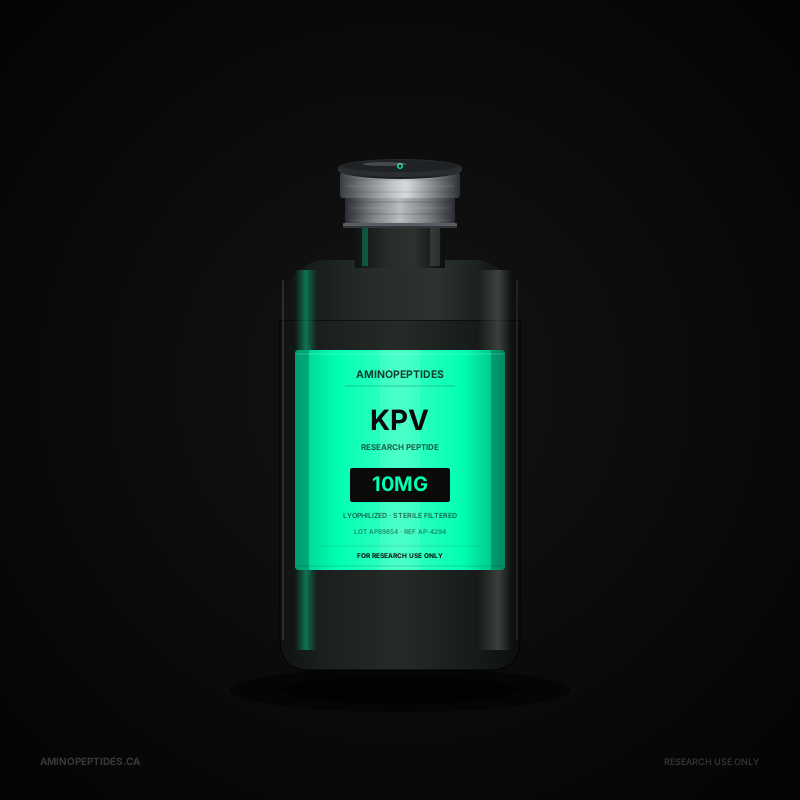
KPV 10 mg
$74.99 Add to cart -
Larazotide 10 mg
$89.99 Add to cart -
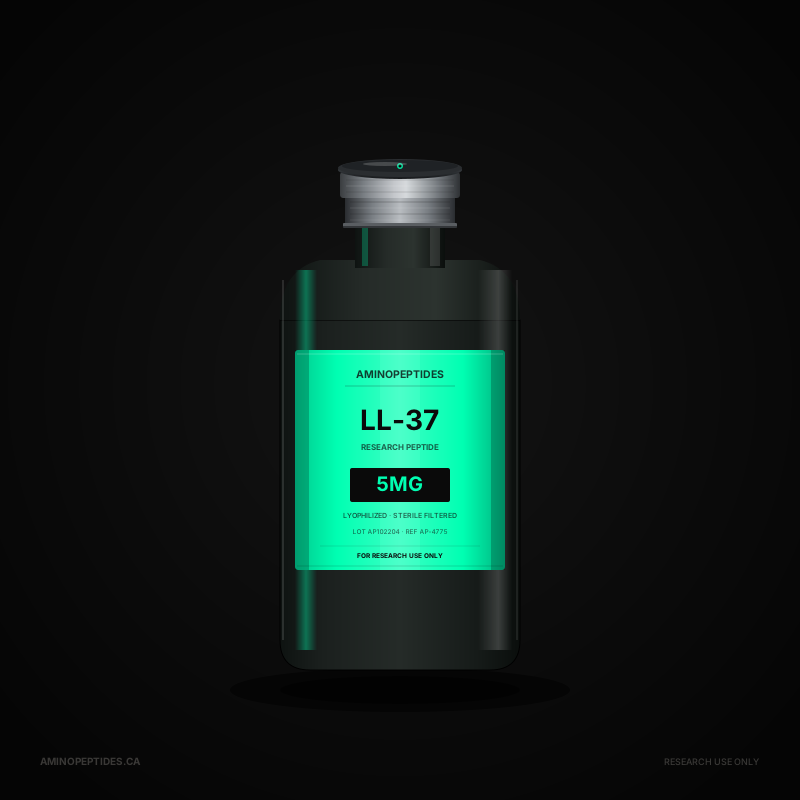
LL-37 5 mg
$119.99 Add to cart -
Oxytocin 5 mg
$69.99 Add to cart -
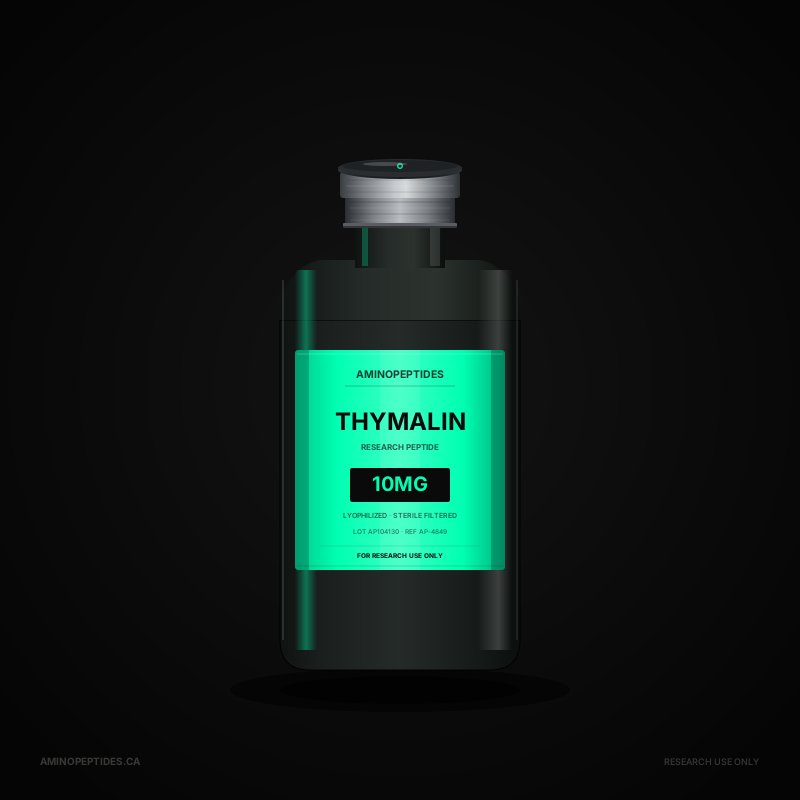
Thymalin 10 mg
$59.99 Add to cart -
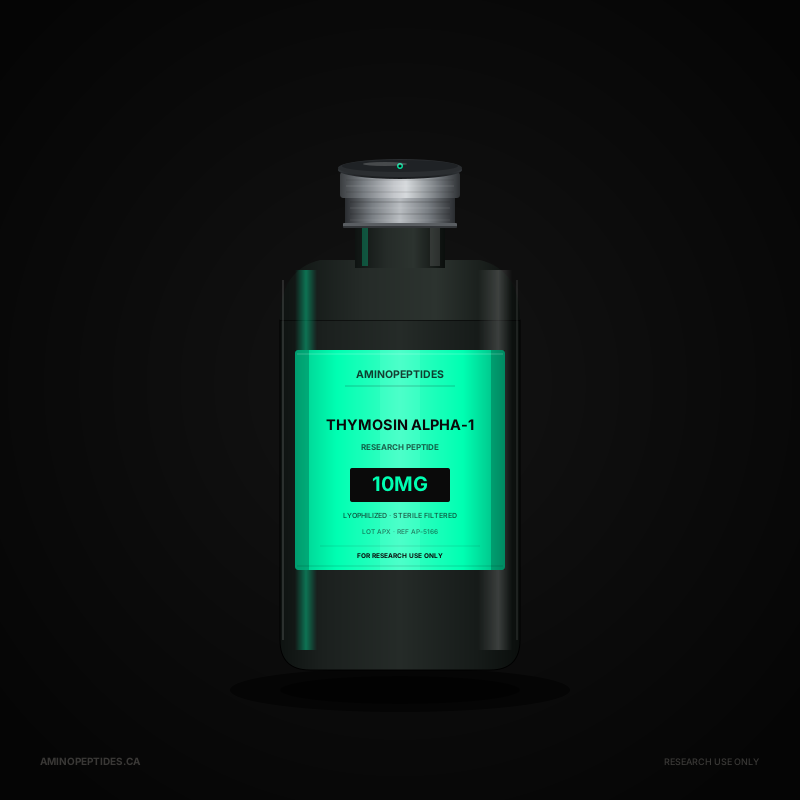
Thymosin α-1 10 mg
$89.99 Add to cart -
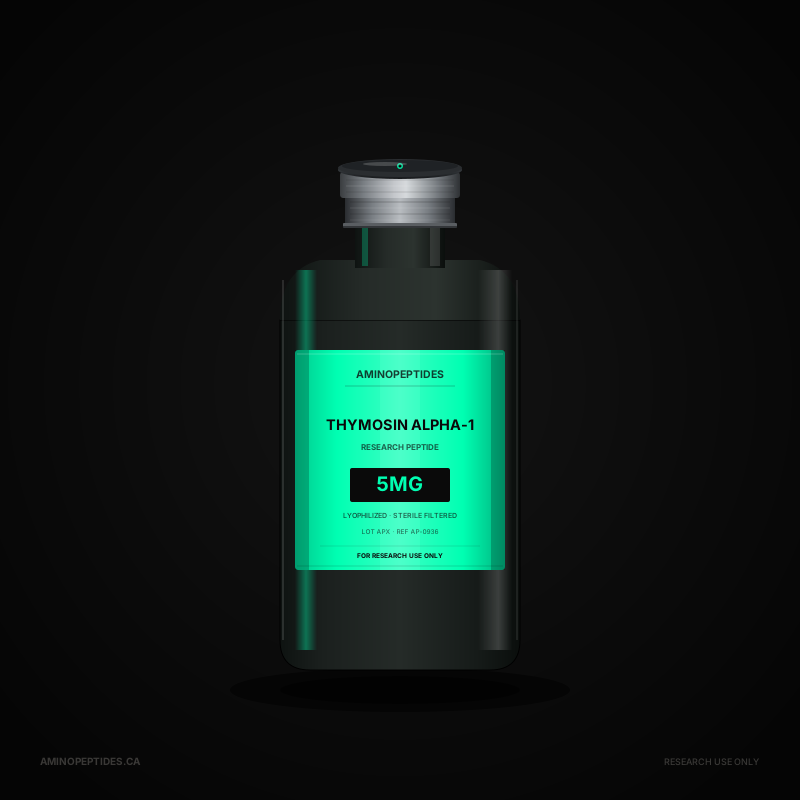
Thymosin α-1 5 mg
$74.99 Add to cart -
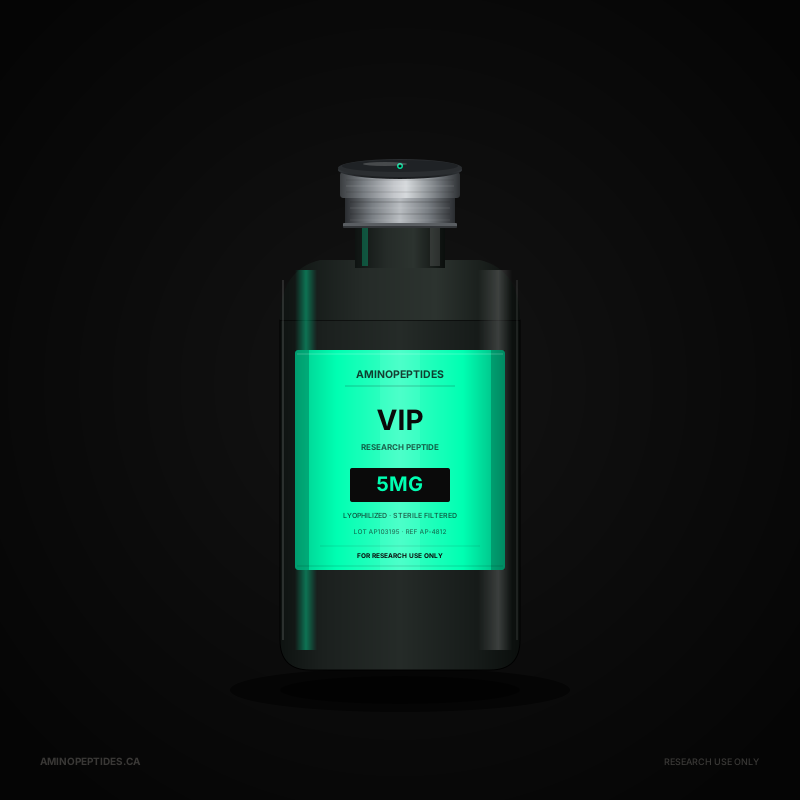
VIP (Vasoactive Intestinal Peptide) 5 mg
$69.99 Add to cart