Table of Contents
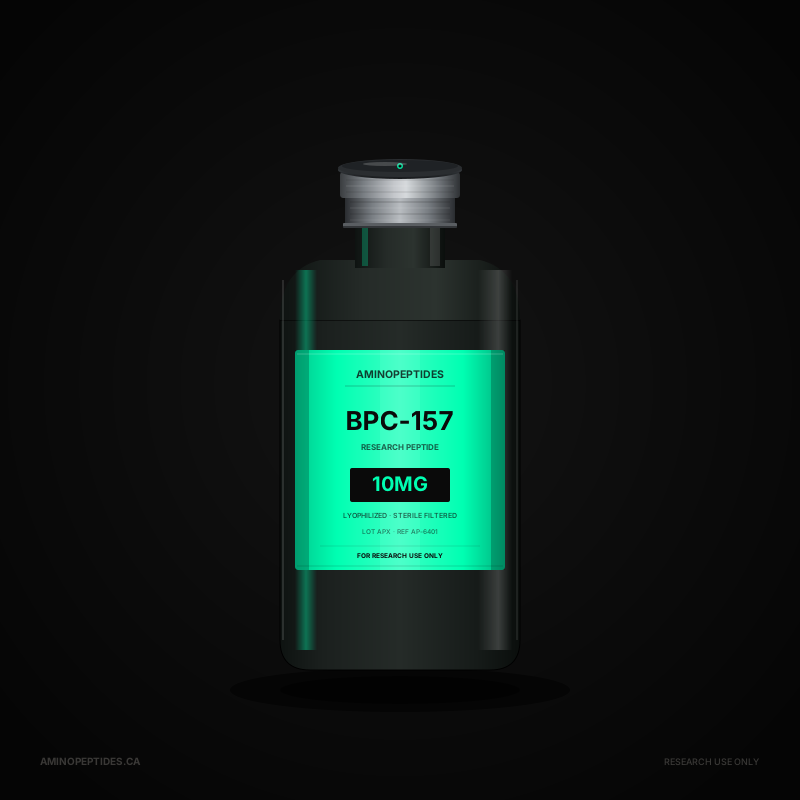
What Reconstitution Means
Learning how to reconstitute peptides is the first practical step for any researcher working with lyophilized compounds. This guide covers everything you need to know about how to reconstitute peptides safely and accurately.
Lyophilized (freeze-dried) peptides arrive as a stable powder. To dose them accurately, researchers must dissolve the powder in a sterile diluent — most commonly bacteriostatic water. This process is called reconstitution — learning how to reconstitute peptides correctly is foundational to any peptide research protocol. Done correctly, it yields a clear, sterile solution that can be dosed precisely from an insulin syringe.
Choosing the Right Diluent to Reconstitute Peptides
Not all peptides dissolve the same way. Before you reconstitute peptides, selecting the correct diluent is the first critical decision:
| Diluent | When to Use | Shelf Life After Reconstitution |
|---|---|---|
| Bacteriostatic water (0.9% benzyl alcohol) | Standard for most peptides — BPC-157, TB-500, GHRPs, GLP-1 agonists, and similar. The 0.9% benzyl alcohol inhibits microbial growth, making multi-dose use safe. | Up to 28 days refrigerated |
| Sterile water for injection | Single-use applications or peptides sensitive to benzyl alcohol. Contains no preservative — once the vial is punctured, use the entire contents or discard. | Use immediately (single dose) |
| Dilute acetic acid (0.1M) | Hydrophobic or aggregation-prone peptides that won’t dissolve at neutral pH. Examples include MGF, PEG-MGF, and certain growth hormone fragments. | Up to 14 days refrigerated |
When in doubt, bacteriostatic water is the default choice for the vast majority of research peptides.
Why Benzyl Alcohol Matters
According to pharmaceutical preservation research, benzyl alcohol at 0.9% concentration provides effective antimicrobial protection for multi-use vials.
The 0.9% benzyl alcohol in bacteriostatic water serves a specific purpose: it is bacteriostatic (prevents microbial growth) but not bactericidal (does not sterilize). This means each time you puncture the vial stopper with a syringe, the benzyl alcohol prevents bacteria introduced by the needle from multiplying in the solution. Without this preservative, multi-dose vials become contamination risks after the first puncture. Note that benzyl alcohol can destabilize some highly sensitive peptides through oxidation — in those rare cases, sterile water with single-use dosing is preferred.
What You Need to Reconstitute Peptides
- Vial of lyophilized peptide (for example, BPC-157 5 mg)
- Bacteriostatic water (0.9% benzyl alcohol)
- Sterile insulin syringes (U-100, 0.5 mL)
- Alcohol prep pads
How to Reconstitute Peptides: Step-by-Step Process
- Allow the peptide vial to reach room temperature. Remove it from cold storage and let it sit at room temperature for 15–20 minutes. Opening a cold vial in a warm room causes condensation to form inside, exposing the lyophilized powder to moisture before you’re ready.
- Wipe both vial stoppers (peptide vial and bacteriostatic water vial) with an alcohol prep pad and let them air-dry fully — approximately 30 seconds.
- Draw bacteriostatic water into a syringe. The typical volume is 2 mL for a 5 mg vial, yielding 2.5 mg per mL. For GLP-1 peptides at higher doses, you may use smaller volumes (1 mL) for dosing convenience.
- Inject slowly down the inside wall of the peptide vial. Angle the needle so the stream runs along the glass, not directly onto the powder cake. Direct impact creates pressure and shear forces that can denature the peptide and cause foaming.
- Swirl gently. Do not shake, vortex, or agitate vigorously. The powder should dissolve within 30–60 seconds of gentle rotation. If it does not dissolve after 2–3 minutes of swirling, let the vial rest on a flat surface for 10 minutes — some peptides need time to hydrate.
- Inspect. The solution should be clear and colorless. If cloudy, see troubleshooting below.
- Label the vial with the peptide name, reconstitution date, concentration (mg/mL), and diluent used.
- Refrigerate at 2–8°C immediately. Most peptides reconstituted in bacteriostatic water are stable for 14–28 days refrigerated; some (like BPC-157) may last longer due to inherent stability.
Dosage Math After You Reconstitute Peptides
Once reconstituted, every dose is a simple division:
- Concentration (mg/mL) = vial strength ÷ water added. Example: 5 mg ÷ 2 mL = 2.5 mg/mL.
- Volume per dose (mL) = desired dose ÷ concentration. Example: 0.25 mg ÷ 2.5 mg/mL = 0.1 mL.
- Units on a U-100 syringe = mL × 100. So 0.1 mL = 10 units.
Use the Built-In Calculator
After you reconstitute peptides, use our free calculator to determine accurate dosing volumes.
For zero-math dosing, use our peptide dosage calculator. Enter vial strength, BAC water volume, and target dose — it returns units on a U-100 syringe automatically.
Troubleshooting Common Issues When You Reconstitute Peptides
| Problem | Likely Cause | Solution |
|---|---|---|
| Cloudy solution | Peptide aggregation or wrong solvent pH | Let sit at room temperature for 10 minutes. If persistent, try adding more diluent or switching to 0.1M acetic acid for hydrophobic peptides. |
| Foaming / bubbles | Mechanical denaturation from shaking or direct stream onto powder | Let the vial sit undisturbed for 15–30 minutes. Foam will settle. Do not attempt to swirl or shake further. |
| Undissolved particles after 10+ minutes | Degraded peptide or insufficient solvent volume | Add more diluent. If particles persist, the peptide may have degraded during storage — discard and use a fresh vial. |
| Air bubbles in syringe | Normal occurrence during drawing | Hold syringe vertically (needle up), flick the barrel gently to move bubbles to the top, then push the plunger slowly to expel air. |
| Difficulty drawing from vial | Vacuum inside vial | Inject an equal volume of air into the vial before drawing liquid. This equalizes pressure and allows smooth withdrawal. |
Common Mistakes When Learning How to Reconstitute Peptides
Even experienced researchers can make errors when they reconstitute peptides. Avoid these pitfalls to protect your investment and ensure accurate dosing.
- Shaking the vial. Always swirl. Shaking creates foam and can fragment the peptide through mechanical denaturation at the air-liquid interface.
- Using tap or distilled water. Only use bacteriostatic or sterile water for injection. Tap water contains minerals and microorganisms; distilled water lacks the preservative needed for multi-dose use.
- Leaving at room temperature. Once reconstituted, peptides must be refrigerated at 2–8°C. Leaving them on a countertop accelerates degradation.
- Reusing syringes. One syringe per dose. Sterility is non-negotiable — reusing needles introduces bacteria and dulls the needle tip, increasing injection discomfort.
- Skipping the temperature equilibration step. Reconstituting a cold vial causes condensation that introduces uncontrolled moisture to the powder.
- Using too little diluent. Overly concentrated solutions can be difficult to dose accurately with standard insulin syringes. Use enough volume to produce a practical concentration.
Peptide-Specific Notes on How to Reconstitute Peptides
| Peptide | Recommended Diluent | Notes |
|---|---|---|
| BPC-157 | Bacteriostatic water | Dissolves easily. Unusually stable in acidic conditions. Long refrigerated shelf life. |
| TB-500 | Bacteriostatic water | Standard reconstitution. Use within 2–3 weeks refrigerated. |
| Semaglutide / Tirzepatide | Bacteriostatic water | May use smaller volumes (1 mL) for higher-dose convenience. Stable up to 28 days refrigerated. |
| MGF / PEG-MGF | 0.1M acetic acid | Will not dissolve properly in bacteriostatic water due to hydrophobicity. |
| GHK-Cu | Bacteriostatic water | Dissolves readily. Solution may have a slight blue tint from copper content — this is normal. |
Storage Quick Reference
Understanding how to reconstitute peptides is only half the equation. Proper post-reconstitution storage is equally critical to maintaining peptide activity and ensuring reproducible research outcomes. Always label reconstituted vials with the date and concentration.
Once you know how to reconstitute peptides properly, correct storage is the next step to preserving peptide integrity.
| Form | Temperature | Expected Stability |
|---|---|---|
| Lyophilized (sealed) | −20°C | Months to years |
| Lyophilized (sealed) | 2–8°C | Weeks to months |
| Reconstituted (BAC water) | 2–8°C | 14–28 days (peptide dependent) |
| Reconstituted (sterile water) | 2–8°C | Use immediately (no preservative) |
For detailed storage guidance, see our complete Peptide Storage Guide.