Table of Contents
What Is Tirzepatide?
Understanding tirzepatide dosage is essential for researchers studying this dual GIP/GLP-1 receptor agonist. This comprehensive tirzepatide dosage guide covers clinical evidence, titration protocols, and practical reconstitution math for Canadian researchers.
Tirzepatide is a 39-amino-acid synthetic peptide and the first dual GIP/GLP-1 receptor agonist — a single molecule that activates both the glucose-dependent insulinotropic polypeptide (GIP) receptor and the glucagon-like peptide-1 (GLP-1) receptor simultaneously. In controlled trials it produced the largest weight-loss and HbA1c reductions of any incretin peptide to date.
Structurally, tirzepatide incorporates a C20 fatty diacid moiety conjugated at lysine-20, which enables binding to serum albumin in circulation. This albumin binding extends the plasma half-life to approximately 5 days (114–120 hours), permitting once-weekly subcutaneous administration. The peptide has higher affinity for the GIP receptor (comparable to native GIP) but roughly 5-fold lower affinity for the GLP-1 receptor compared to native GLP-1 — yet this dual agonism produces additive effects on insulin secretion, glucagon suppression, appetite reduction, and slowed gastric emptying beyond what GLP-1 agonism alone achieves.
Key Clinical Trial Data on Tirzepatide Dosage
SURMOUNT Trials (Obesity)
The SURMOUNT program represents the largest body of clinical evidence for tirzepatide in weight management:
- SURMOUNT-1 (n=2,539, non-diabetic adults, 72 weeks): Placebo-adjusted weight loss of approximately 15% (5 mg), 19.5% (10 mg), and 20.9% (15 mg). Over one-third of the 15 mg group lost more than 25% of body weight.
- SURMOUNT-2 (n=938, adults with T2D and obesity, 72 weeks): Mean weight loss of ~12.8% (10 mg) and ~14.7% (15 mg) vs ~3.2% placebo. HbA1c reductions of approximately 2.1%.
- SURMOUNT-3 (n=579, 72 weeks with intensive lifestyle run-in): An additional ~18.4% weight loss beyond the run-in period at the 15 mg dose.
- SURMOUNT-4 (n=670, withdrawal design): Participants switched from tirzepatide to placebo at week 36 regained roughly half the lost weight by week 88, confirming the need for continued therapy to maintain results.
SURPASS Trials (Type 2 Diabetes)
Across SURPASS-1 through SURPASS-5, tirzepatide (5/10/15 mg) reduced HbA1c by 1.9–2.6% and body weight by 7–13 kg. The head-to-head SURPASS-2 trial against semaglutide 1 mg is particularly noteworthy: tirzepatide 15 mg achieved superior HbA1c reduction (~2.5% vs ~1.9%) and substantially greater weight loss (~12.4 kg vs ~6.2 kg).
Tirzepatide Dosage Pharmacokinetics
Understanding tirzepatide dosage pharmacokinetics helps researchers design accurate titration schedules and predict steady-state concentrations.
| Parameter | Value |
|---|---|
| Half-life | ~5 days (114–120 hours) |
| Tmax | 8–72 hours post-injection (median ~24 hours) |
| Bioavailability (subQ) | ~80% |
| Elimination | Proteolytic degradation (not significantly renal) |
| Steady state | ~4–5 weeks of weekly dosing |
| Dosing frequency | Once weekly (subcutaneous) |
Standard Tirzepatide Dosage Titration Schedule
The published titration pattern from phase-3 trials ramps the dose every 4 weeks. Researchers typically mirror this to minimize GI side effects:
| Weeks | Weekly dose | Purpose |
|---|---|---|
| 1–4 | 2.5 mg | Initiation — tolerability assessment only |
| 5–8 | 5 mg | First therapeutic dose |
| 9–12 | 7.5 mg | Step-up |
| 13–16 | 10 mg | Maintenance option |
| 17+ | 12.5–15 mg | Maximum published dose |
Tirzepatide Dosage Reconstitution Math (10 mg vial)
Accurate tirzepatide dosage calculations require precise reconstitution volumes. Use the following formulas to determine concentration after reconstitution.
Using Tirzepatide 10 mg with 2 mL bacteriostatic water:
- Concentration: 10 mg ÷ 2 mL = 5 mg/mL
- 2.5 mg dose: 0.5 mL = 50 units on a U-100 syringe
- 5 mg dose: 1 mL = 100 units
- 7.5 mg dose: 1.5 mL = 150 units
Use the Aminopeptides dosage calculator to auto-compute for any vial size.
Tirzepatide vs Semaglutide (Head-to-Head)
| Attribute | Tirzepatide | Semaglutide |
|---|---|---|
| Mechanism | GIP + GLP-1 dual agonist | GLP-1 agonist only |
| Half-life | ~5 days | ~7 days |
| SURPASS-2 weight loss | −12.4 kg at 15 mg | −6.2 kg at 1 mg |
| SURPASS-2 HbA1c reduction | −2.5% | −1.9% |
| SURMOUNT-1 weight loss (72 wk) | −20.9% at 15 mg | −14.9% at 2.4 mg (STEP-1) |
| Frequency | Once weekly | Once weekly |
Tirzepatide Dosage Side-Effect Profile and Mitigation
The most common adverse events in clinical trials were gastrointestinal: nausea (15–33%), diarrhea (12–21%), vomiting (5–15%), and constipation. These effects are dose-dependent and typically peak during dose-escalation phases, subsiding over several weeks as tolerance develops. Discontinuation due to adverse events was 4–7% across SURMOUNT and SURPASS trials.
Strategies for minimizing GI side effects in research protocols:
- Strict 4-week titration steps — the 2.5 mg starting dose exists specifically for tolerability, not therapeutic effect.
- Dietary modification — smaller, more frequent meals and avoidance of high-fat foods reduce nausea burden.
- Hydration — adequate fluid intake helps manage both nausea and constipation.
- Anti-emetic support — ondansetron (Zofran) has been used for acute nausea management in clinical settings.
- Injection timing — some protocols administer the dose in the evening to sleep through the initial nausea window.
Emerging Tirzepatide Dosage Research Areas
New tirzepatide dosage studies are exploring applications beyond metabolic syndrome, including MASH/NASH liver disease and cardiovascular risk reduction.
Tirzepatide research has expanded well beyond obesity and type 2 diabetes:
- MASH/NASH (metabolic-associated steatohepatitis): The SYNERGY-NASH trial demonstrated that tirzepatide resolved MASH without worsening fibrosis in approximately 44–62% of treated patients versus ~10% placebo.
- Heart failure with preserved ejection fraction (HFpEF): The SUMMIT trial showed improved heart failure composite scores and clinically meaningful weight reduction in HFpEF patients with obesity.
- Obstructive sleep apnea: SURMOUNT-OSA showed significant reductions in the apnea-hypopnea index (approximately 25–30 events/hour reduction), suggesting potential for tirzepatide to address a condition that is strongly weight-linked.
Storage and Stability
Maintaining proper tirzepatide dosage accuracy requires correct storage conditions to prevent peptide degradation.
Lyophilized tirzepatide should be stored at -20°C for long-term stability or at 2–8°C for medium-term use. Once reconstituted in bacteriostatic water, the solution is generally stable for up to 28 days when refrigerated at 2–8°C. Avoid freeze-thaw cycles, which can accelerate peptide aggregation and reduce potency. Reconstituted vials should be protected from light and handled with alcohol-swabbed stoppers at every use.
Where to Source
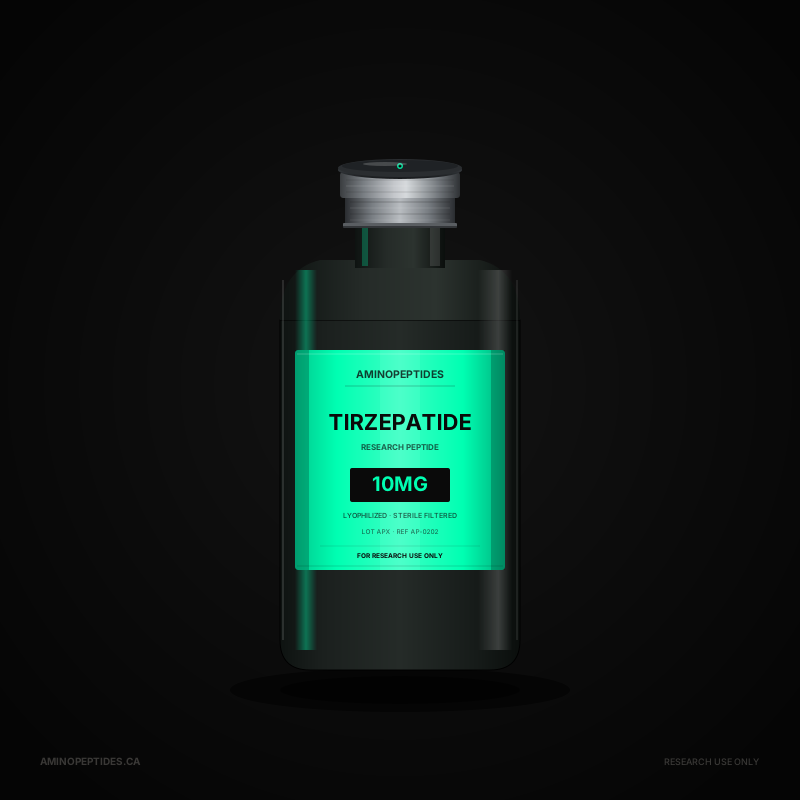
For researchers ready to begin tirzepatide dosage experiments, sourcing pharmaceutical-grade peptide is critical to reproducible outcomes.
Aminopeptides.ca offers tirzepatide in 10 mg and 30 mg vials. Every lot ships with ≥ 99.9% HPLC purity and a third-party Certificate of Analysis. Shipped cold-chain from Canada — no customs holds, no border ambiguity.